SUMMARY
I take as my starting point Marta Vaarik’s solo exhibition “So What”, which opened at Artrovert Gallery this spring. Through the atmosphere of the exhibition and the body of work it brought together, I want to explore the forces surrounding the artist. This will not, however, be a comprehensive profile that sets out to unravel her artistic position once and for all.
Exhibitions are certainly central to Vaarik’s current practice, alongside music videos and documentary work, but any broader account of what she does would also have to consider the entanglement of her media persona and artistic self. Even as an artist, she remains the theatrical daughter of her famous actor father and, in a sense, the Marta who appeared on the cover of Playboy (February 2008). At the same time, she has developed an entire protocol for how to stage and present herself to the mass media. Perhaps, then, Vaarik and others like her offer a good opportunity to examine the attention-deficit, hyperactive flavour of the Instagram and TikTok generation’s worldview.
For now, though, I will focus on the material surrounding the solo exhibition at Artrovert – the press release, poster, pinked-up gallery space and the paintings, sculptures and videos on display.
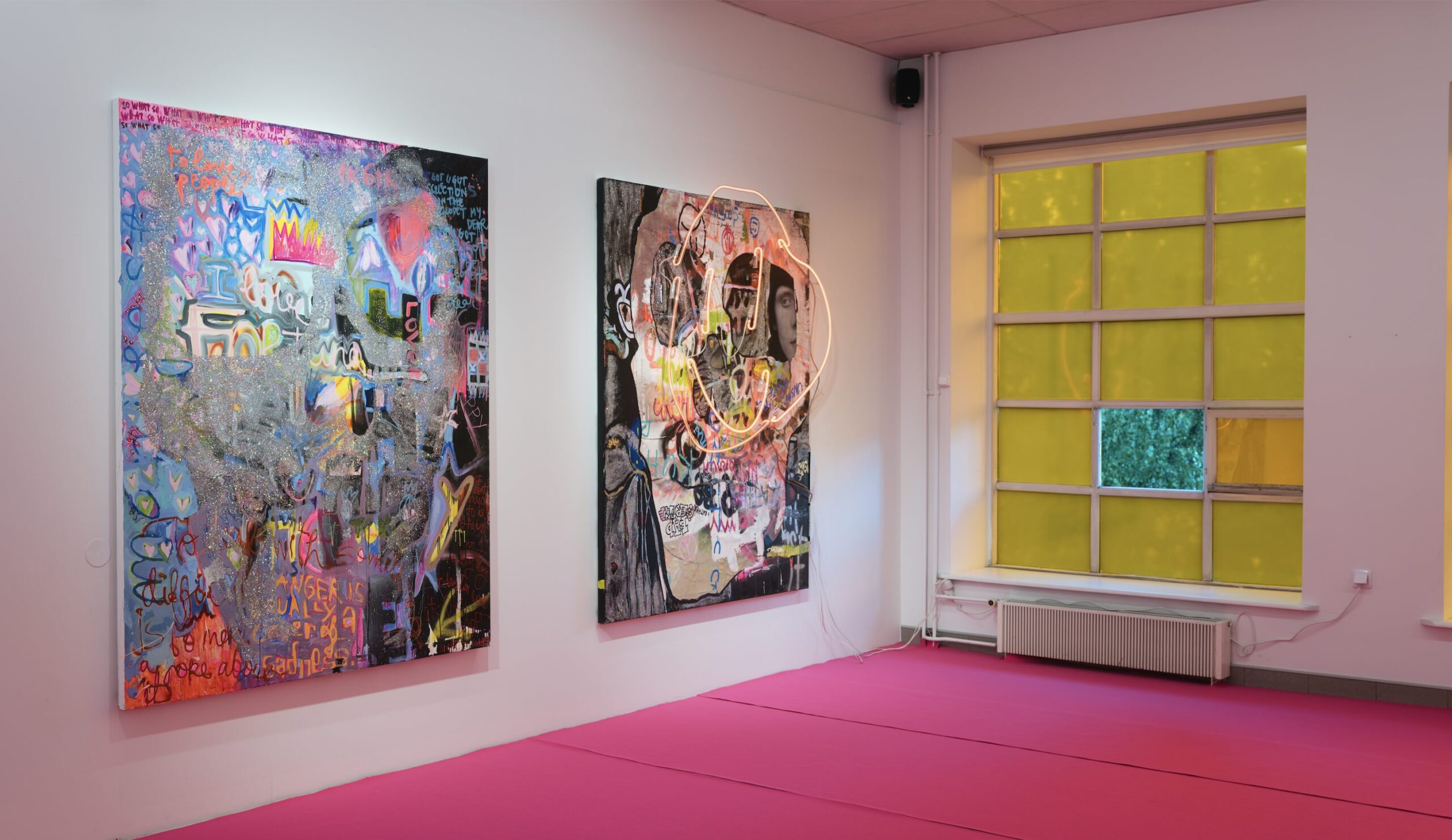
The underlying attitude that paradoxically intertwines indifference and caring – bringing together fierce, zombie-formalist pink paintings and the 3D-printed self-portrait sculpture “Hold Me Dearly” (2023), with its Madonna-like figure – has characterised Marta Vaarik’s position for some time. Although Vaarik’s first round of studies at the Estonian Academy of Arts earned her a bachelor’s degree in painting in 2015, she has said in private that she does not necessarily feel entirely at home as a painter.
What is interesting, on the other hand, is that some of these paintings are already several rounds into an afterlife of their own, constantly accumulating new details and layers – in other words, they are genuinely alive. Their knowingly rough style and emphasis on sweeping gestures also deserve recognition: alongside the prim and proper approaches that dominate much art by women, they feel liberating. A separate question is the possible influence of Jean-Michel Basquiat – all those skulls, crowns, doodles and scribbles recall the late master, except that Vaarik’s painterly gestures, unlike Basquiat’s, never feel neurotic.
I would not claim that the three videos presented side by side as part of the exhibition – “Whatever” (2026), “i rather be object” (2020) and “Let Me Cry Over My Sad Fate” (2019) – were particularly easy to watch through in their entirety, but even a first impression revealed something important. At the broadest level, all three share a concern with spiritual transformation and rebirth, whose intermediate stages can be painful and even brutal, but are nevertheless essential to growth. Here, too, we encounter the restorative, healing ethos of Marta Vaarik’s art or, in the artist’s own words: “Come here, I’ll send you flying and throw your bad thoughts into the fire!”