SUMMARY
Am I turning into a fascist? The thoughts running through my head raise uncomfortable questions. I googled “the psychology of fascism” to find out whether my empathy for power and playful aggression ventures into authoritarian territory. Stalks sway and leaves rustle, while the person in charge seems to be doing everything they can to hide behind the beauty of nature. I don’t usually mind plants – I even grow them at home – but at the same time, I’m bothered by how all this greenery gets in the way of the artworks. It feels as though the environment is being allowed to dominate out of sheer goodwill.
Before the exhibition opened, the team at the Contemporary Art Museum of Estonia (EKKM), which is celebrating its 20th anniversary, invited volunteers to come and help work the soil in the garden. The thought of curators, artists and other movers and shakers getting their hands dirty is a pleasing one. Building things together is good – no one can argue with that! And presumably curating together is too? As a gesture, the decision seems to say: the individuals here don’t want power. Because wanting power is… rather bad. And who would want to be bad, who would dare? The artist doesn’t want to be bad, the curator doesn’t want to be bad, and presumably neither does the visitor. In the name of goodness, visitors can even put their piss to work – as part of Flo Kasearu’s work “Local Engagement” (2026), a tall urinal welded together from copper plates invites anyone who feels the need to relieve themselves. I heard the material for the work was very expensive – cool! And now it’s oxidising beautifully through use, in a certain decadent fashion that fascists certainly wouldn’t approve of.
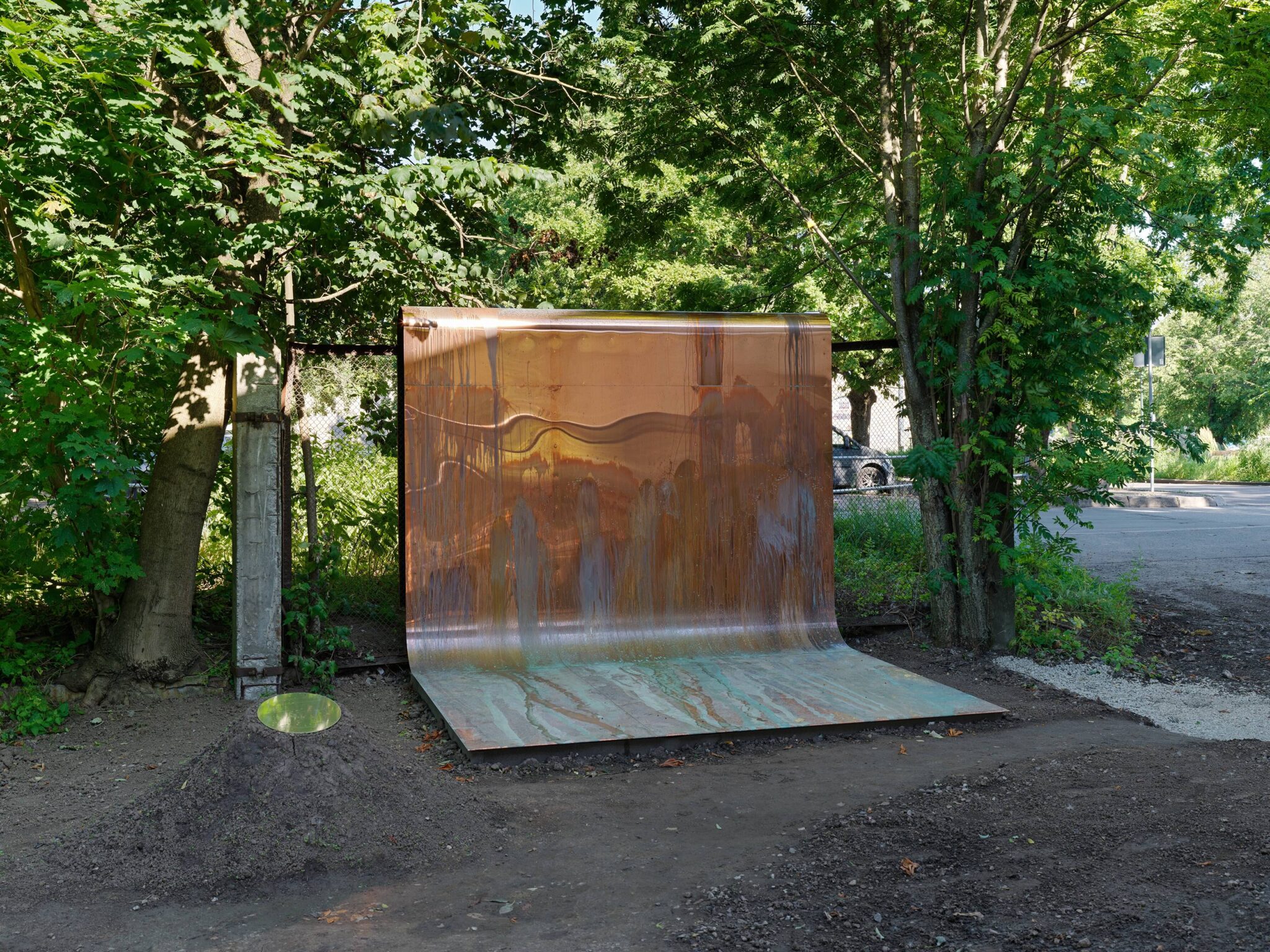
Engaging Locals
2026
Copper plates on a wooden frame, urine
Installation view in the courtyard of EKKM
Executed by Hans-Otto Ojaste
Twenty years on, everyone associated with the museum can look back on its history with pride, of course. The EKKM building as a social sculpture, accompanied by its handmade infrastructure for hanging out: cushions made from old outdoor advertising banners, a shelter built from cheap planed boards. But a gathering of some kind as an artwork is itself a cultural institution and getting people to interact as part of an artwork therefore inevitably carries a certain institutional undertone. It seems to me, by contrast, that only hanging out (and understanding and eating and pissing, etc.) that happens spontaneously can genuinely embody the values that the artists and/or curators seek to articulate in their introductory texts.Openness means vulnerability; the absence of walls and locks poses a practical risk to property. EKKM and the exhibition’s creators therefore trust the public enough to let anyone come onto their grounds to see the art at any time. For me, this decision beautifully blurred the boundaries between art and context, extending the searching gaze into places where it might otherwise never have ventured. And I suppose it would be selfish – if not downright fascist – to prefer experiencing art in a bubble of peace and quiet.