SUMMARY
As of spring 2026, the auction record for a living artist in Estonia belongs to Tiit Pääsuke (b. 1941). His painting-assemblage “Folk Costume III” (1989) rose from a starting price of 24,000 euros to 113,000 euros at last year’s Haus Gallery spring auction, driven up by intense bidding (a buyer’s premium is added to this sum for the auction house’s services). This year’s spring auction season did not produce a comparable result.
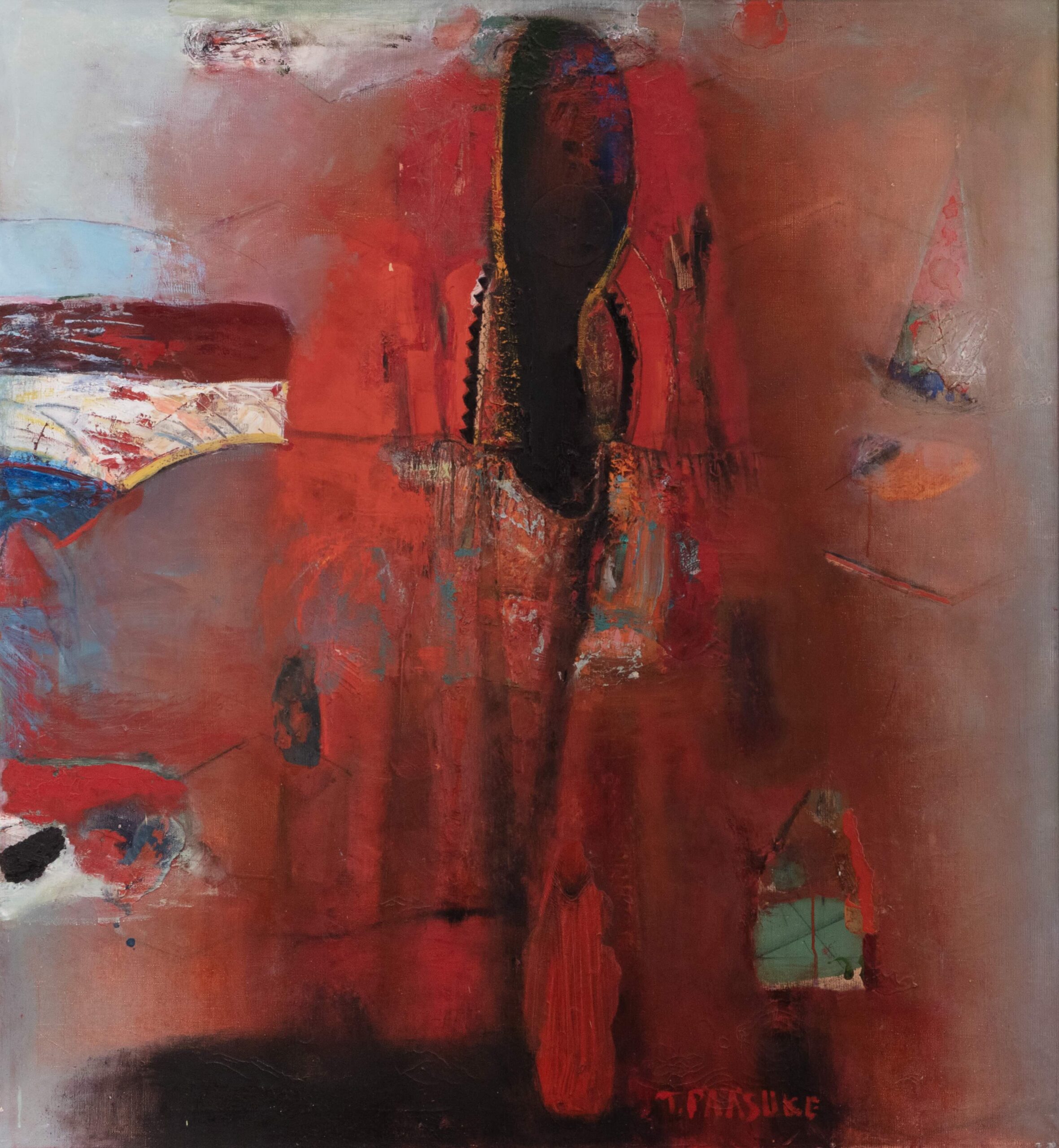
Folk Costume III (inspired by Mustjala)
1989
Oil on canvas, 130 x 120 cm
Sold for 133 000 Euros
at Haus Gallery auction on 26. IV 2025
Globally, the price record for a living artist belongs to the American Jasper Johns (b. 1930). His conceptual painting “Flag” (1958) was sold privately in 2010 for 110 million dollars. Adjusted for inflation, that sum would now amount to roughly 162 million dollars.
This spring’s auction season in Estonia nevertheless saw several new records. The most notable was the highest price ever paid at public auction for a work by a female artist. Malle Leis’s painting “Sandra and Château de Tarascon” (1983) sold at Allee Gallery for a final price of 100,000 euros – just 1,000 euros above the starting bid. The previous record had belonged to Aili Vint, whose “Hill Meadow in Mist” (1978) fetched 65,000 euros at the 2024 spring auctions. Both works are undisputed highlights within the artists’ oeuvres, so their strong results were not unexpected.
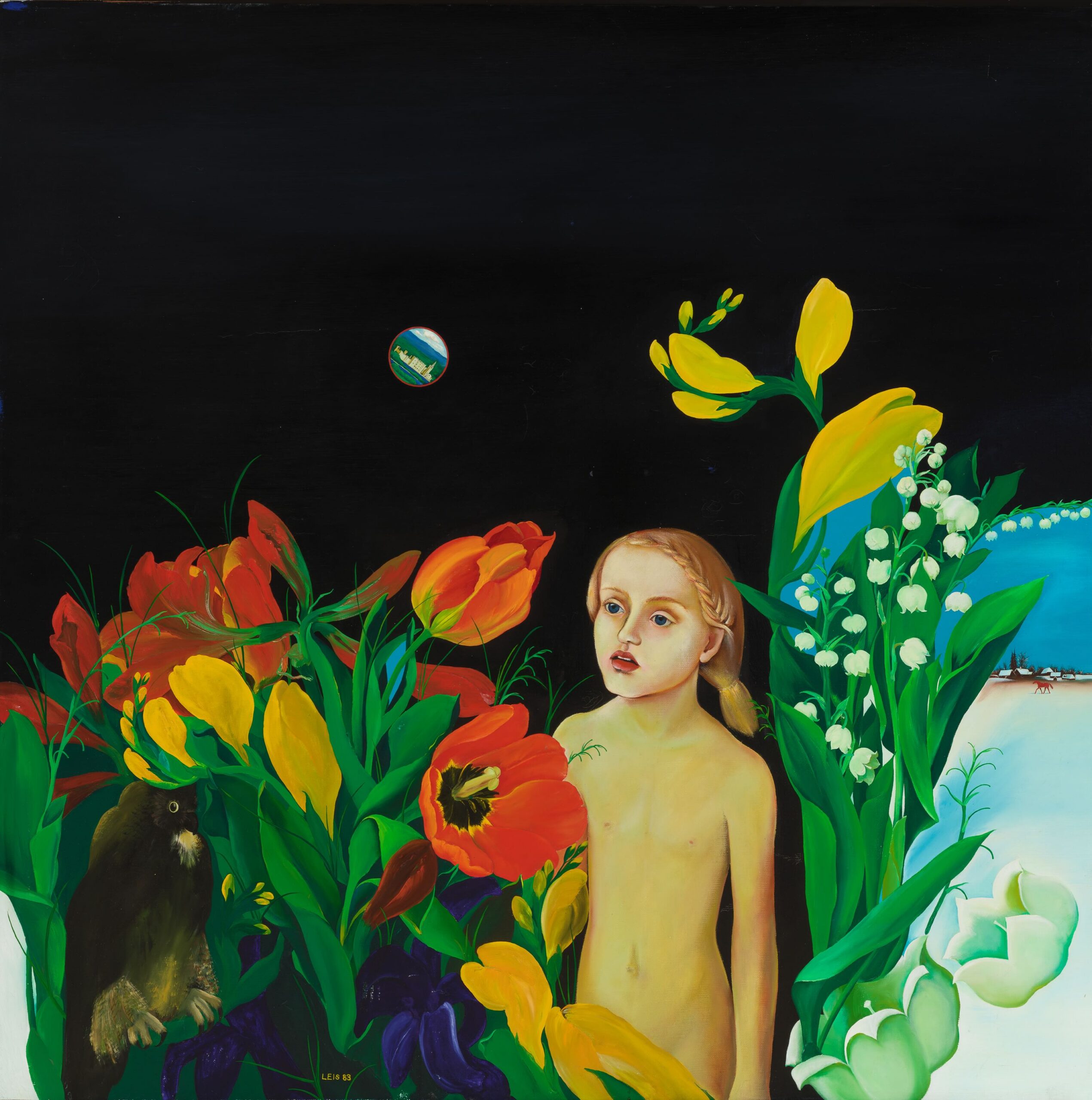
Sandra and Château de Tarascon
1983
Oil on canvas, 150 x 150 cm
Sold for 100 000 Euros
at Allee Gallery spring auction on 10. V 2026
At the same time, this year’s spring auctions also suggest a cooling of activity. It is no longer taken for granted that sell-through rates will hover around 70 per cent. Two well-known auction houses recorded rates of just 34 per cent and 52 per cent, with most works selling at or near their starting prices. By contrast, auctions focusing on younger artists have performed considerably better by the same measures. Why? The answer may lie partly in lower and therefore more attractive starting prices, but also in these platforms’ ability to mobilise a new generation of buyers who prefer to acquire work produced in their own lifetime.
Another striking feature of the 2026 spring season is that even established names – such as Eduard Wiiralt, Peeter Mudist, Kaido Ole and Mari Kurismaa – have gone unsold. This suggests a more cautious mood among collectors, who appear to be waiting for outstanding masterpieces by recognised artists rather than purchasing works on the strength of a name alone. Since Estonia regained independence, it has often been observed that the local art market is strongly auction-driven. Yet recent developments point to a gradual rebalancing. New (representation-focused) galleries have emerged, opportunities to purchase art have increased, and younger generations have entered the scene, more confidently sharing their own work on social media. In recent years, there has been a growing awareness that owning original art at home is not a privilege reserved for a select few.